
Wearable health technology is rapidly changing how we look after ourselves. We’re not just using them to count steps; we can now access a range of new wearable health tech devices from advanced smartwatches to medical-grade sensors that monitor heart activity in real-time. These devices are entering a new era, giving us continuous insights, proactive care, and a smarter way to manage ourselves.
With more people understandably wanting control over their health, and modern healthcare systems looking for more reliable and data-led solutions, wearable tech is becoming an essential tool for everyone.
Let’s dive into what these technologies are, why they matter, and how innovation hubs like ours at Warwick Science Park are helping to build the future of personal healthcare.
What exactly is wearable health tech?
In simple terms, wearable health tech devices are sensor-based technologies you can wear on the body, usually on the wrist, that constantly monitor health data and send insights back to you (or in some cases, your doctor). They are designed to give you a continuous picture of your health, far beyond what a yearly check-up can offer.
We can group them into three categories:
- Consumer devices: Think smartwatches, basic fitness trackers, activity bands, and smart rings.
- Wellbeing wearables: Devices focused on specific metrics like sleep trackers, stress monitors, posture sensors, or continuous temperature monitors.
- Medical-grade wearables: Highly precise tools used in clinical settings, such as ECG patches, continuous glucose monitors (CGMs), and respiratory trackers used for remote patient monitoring.
At their core, all these technologies combine smart sensors, strong connectivity, and intelligent software to transform raw data into genuinely useful health insights we can learn from and improve on.
How does wearable health technology work?
In short, wearable tech relies on a mix of sensors. These can be:
- Accelerometers to measure movement
- Optical sensors to track your heart rate and blood oxygen
- Electrodes to detect electrical signals like an ECG.
Other specialised sensors can assess other vital signs, like your temperature or hydration levels. This continuous data stream is quite different to a one-off visit to the doctor’s and is what allows us to identify long-term trends, habits, and critical patterns.
Connectivity and mobile apps
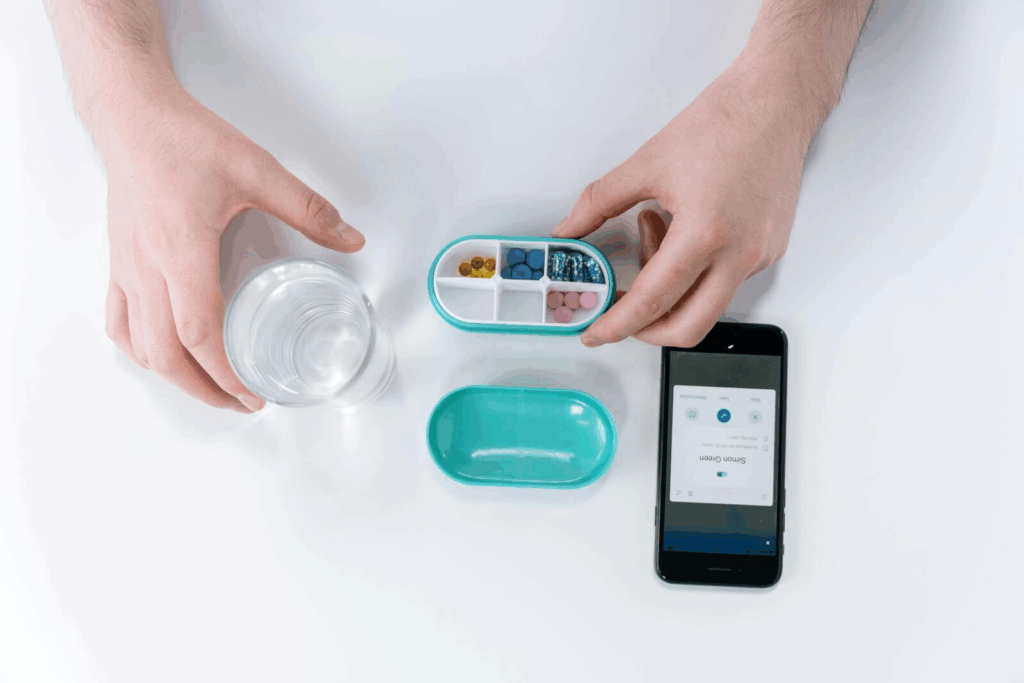
Most wearable health tech devices connect instantly to your smartphone or a cloud platform using Bluetooth or Wi-Fi. These dedicated mobile apps are crucial as they turn complex raw data into easy-to-read dashboards, charts, and health scores. This allows users to track their progress, receive alerts, and build a much deeper understanding of their own body.
From data to insight: Algorithms and AI
Behind the scenes, algorithms analyse the signals to detect irregularities like unusual heart rhythms, sharp stress spikes, or a sudden drop in sleep quality. These days, devices use Artificial Intelligence (AI) to take things a step further, providing personalised recommendations, predicting future health risks, and supporting with early intervention.
Why wearable health tech is transforming personal healthcare
Wearable health technology is changing the way we understand and manage our wellbeing, turning passive patients into active participants in their own care. By offering real-time insights and continuous monitoring, these devices bridge the gap between everyday life and clinical support in a way that’s never been possible before.
1. Empowering you to take control
Wearables put the user in the driver’s seat. By clearly tracking metrics like heart rate, sleep quality, steps, or stress levels, people can make informed decisions themselves. They can adjust their behaviour to be more in line with their goals and stick to healthier routines. For many, seeing real-time feedback is incredibly motivating!
2. Supporting early intervention and prevention
The biggest advantage of continuous monitoring is its potential to catch subtle changes that often go unnoticed. A slight variation in heart rate, reduced activity over a few days, or consistently poor sleep can be early red flags for an underlying issue that otherwise could have been missed. Wearables help identify these concerns sooner, enabling both the user and or doctor to take proactive care.
3. Remote monitoring for long-term conditions
Clinicians are increasingly using medical-grade wearables to track patients between appointments, especially for chronic conditions like diabetes or heart disease. Whether it’s an ECG patch for at-home heart checks or a CGM tracking blood sugar 24/7, this approach reduces the need for hospital visits, speeds up clinical decision-making, and delivers more tailored care plans.
4. Enhancing wellbeing in the workplace
Some businesses are now incorporating health tech into voluntary wellbeing programmes. When implemented ethically and with consent from all parties, monitoring activity, sleep, and stress can lead to better employee health and improved productivity across the organisation.
Challenges and key considerations in personal healthcare
Despite the massive potential, innovators must tackle several challenges to ensure widespread success:
- Data privacy and security: Handling extremely sensitive health information requires best-in-class encryption, transparent consent, and robust data governance.
- Accuracy and validation: Consumer devices don’t always match the precision of medical-grade ones. Clinical testing and regulatory compliance are essential for integration into healthcare.
- Digital inequality: Not everyone has access to smartphones, connectivity, or the financial means to invest in this technology. Solutions must be affordable and accessible for all.
- Integration with clinical systems: For the data to be truly useful, it needs to connect seamlessly with existing healthcare platforms (EHRs) so doctors can actually interpret and act on it.
- Navigating regulation: As digital health explodes, the rules around software as a medical device and data-driven tools are becoming increasingly complex.
How Warwick Science Park is helping to build the future of health tech
Science parks play a really important role in advancing digital health innovation, and Warwick Science Park is a prime example. As a key part of the University of Warwick’s innovation ecosystem, we offer a supportive environment where health tech and medtech companies can develop, test, and scale their game-changing ideas.
UWSP supports wearable and digital health innovators by providing:
- Specialist facilities: Dedicated office, lab, and technology spaces for startups and growing businesses.
- Business support: Access to tailored programmes, including mentoring, marketing assistance, and connections to finance and investor networks.
- University access: Direct links to the world-class expertise at the University of Warwick in engineering, data science, medicine, and computer science.
- A collaborative community: A vibrant environment where forward-thinking tech and health-focused companies can network and collaborate.
By combining the right blend of space, talent, and support, we are built to help innovators in wearable health technology launch new solutions faster and more effectively.

Thinking of developing wearable health tech? Now’s the time
Wearable health technology is fundamentally transforming personal healthcare by empowering individuals, aiding clinicians, and enabling early, proactive intervention.
But for innovators in this space, success relies on access to the right environment, expertise, and partnerships. Warwick Science Park offers the facilities, support, and community that ambitious wearable health tech businesses need to grow and thrive.
If you’re developing wearable health devices or exploring new ideas in digital health, we’d love to speak with you.
Contact our team to learn how Warwick Science Park can support your journey.